
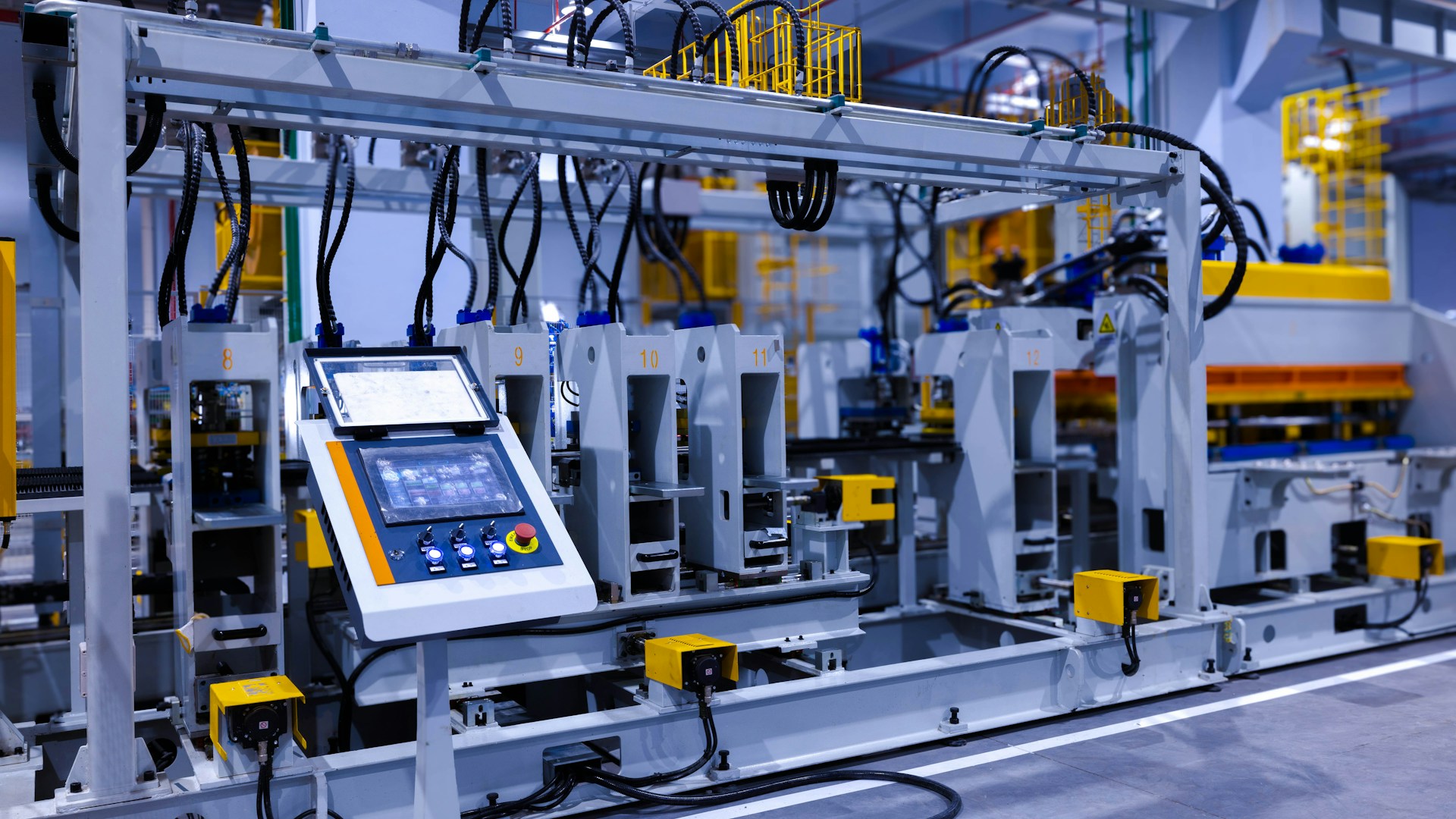
Smart Manufacturing
Zero-Defect Assembly — Verified at Every Step
FERSMEK poka-yoke stations combine machine vision, barcode readers, and sensor fusion with PLC logic to enforce correct assembly before a part moves to the next station. >99.9% accuracy. No defect escapes.
See How It Works
Error Proofing in Action
Watch how sensors, cameras, and PLC logic work together to verify every assembly step — catching defects in under 200 milliseconds.
Why Error Proofing
Stop Defects at the Source — Not in the Field
Traditional quality relies on end-of-line inspection or statistical sampling. By then, dozens or hundreds of non-conforming units have already been built. A FERSMEK error proofing station enforces correctness at the moment of assembly — so the fixture physically cannot release until every check passes.
Each station integrates directly with your PLC and MES, logging pass/fail data, operator ID, and image capture per unit. You get real-time visibility into defect rates by station, shift, and product variant — and the traceability to close audit findings fast.
FERSMEK engineers design the detection logic, select the sensors and cameras, write the PLC code, and commission the station on your line. One team. No integration guesswork.
How It Works
Four Steps. Every Assembly. Every Unit.
Detect
Sensors and cameras scan the assembly — presence, orientation, part number, torque value, and barcode — within the cycle time window.
Verify
PLC logic compares readings against the work order standard. Vision checks part-number barcode. Force/torque checks join quality.
Alert
On fail: fixture locks, stack light fires, HMI shows the failed check, and MES receives an alert. On pass: fixture releases automatically.
Record
Every result — pass or fail — is logged with timestamp, operator ID, station ID, and image capture. Full unit-level traceability.
System Architecture
Hardware Layer + Intelligence Layer
Station Configurations
From Manual Lines to Fully Automated Cells
Operator places the part and presses a foot pedal or two-hand control. Station checks and releases. Ideal for low-volume, high-mix assembly where robot investment is not justified.
- Foot pedal / two-hand cycle start
- Visual and audio pass/fail feedback
- Fixture lock on fail
- Operator-ID login via barcode scan
Conveyor or lift positions the part automatically. Operator performs manual steps; station verifies each critical check before releasing to the next carrier.
- Carrier-triggered automatic cycle start
- Operator prompt sequence on HMI
- Interlock between operator steps
- MES work-order-driven check rules
Integrated into an automated cell or conveyor line. Station cycles independently — detect, verify, pass/route or fail/reject — without operator involvement at the check point.
- Conveyor-integrated — no line stop on pass
- Automatic reject divert on fail
- Vision-guided part presence and ID
- 100% inline, zero sampling compromise
Specifications
Technical Specifications
Full datasheet available on request
Applications
Industries Where Error Proofing Delivers the Most Value
Automotive Assembly
Verify torque, fastener presence, part orientation, and connector seating at every sub-assembly stage. Prevent mis-builds from reaching the next station.
Electronics Manufacturing
Confirm component polarity, part-number barcode, and placement before soldering or encapsulation. Catch mixed-part errors that escape visual inspection.
Medical Device Assembly
Enforce critical assembly sequence and component traceability for FDA/ISO 13485 compliance. Full per-unit audit trail with image capture.
Pharmaceutical Packaging
Verify label, batch code, and seal integrity before product leaves the line. Reject non-conforming units automatically with MES notification.
Food & Beverage
Confirm fill level, cap presence, and date code printing before case packing. Integrates with line PLC without disrupting existing conveyor logic.
Industrial Equipment
Validate wiring connection, valve assembly sequence, and test result capture for custom-built machines and panels before they leave the workshop.
Stop Defects Before They Leave the Station
Tell us about your assembly process and defect history. FERSMEK engineers will design an error proofing architecture matched to your line configuration, cycle time, and traceability requirements.